




Many cats naturally drink less water than they actually need. As a New Pet Parent, it can be difficult to know whether your cat is staying properly hydrated, especially since felines are experts at hiding early signs of dehydration.
Whether you live in the United States or Canada, climate, indoor heating, and your cat's diet all influence daily water intake. Learning simple hydration habits is one of the easiest ways to support lifelong health. These preventive routines complement Essential Dog Care Tips and responsible chăm sóc chó, reminding pet owners that good daily care benefits every companion animal.
Why Hydration Matters for Cats
Water supports nearly every function in your cat's body.
Proper hydration helps regulate body temperature, supports kidney function, aids digestion, lubricates joints, and promotes healthy urinary tract function.
Cats that consistently drink enough water are generally at lower risk for urinary crystals, bladder inflammation, and kidney disease.
Recognize the Signs of Dehydration
Early detection can prevent serious health problems.
Watch for symptoms such as:
- Dry or sticky gums
- Sunken eyes
- Low energy
- Loss of appetite
- Reduced skin elasticity
- Constipation
- Dark, concentrated urine
If your cat shows severe dehydration or refuses water completely, contact your veterinarian immediately.
Offer Fresh Water Every Day
Cats are surprisingly selective about water quality.
Replace drinking water daily and wash bowls with mild soap to remove odors and bacteria. Many cats prefer cool, fresh water over water that has been sitting for hours.
Keeping several clean water stations throughout your home encourages more frequent drinking.
Choose the Right Water Bowl
The bowl itself can influence drinking habits.
Many cats prefer wide, shallow bowls because their whiskers don't touch the sides. Stainless steel or ceramic bowls are usually easier to clean and less likely to retain odors than plastic.
Experiment with different bowl styles to discover your cat's preference.
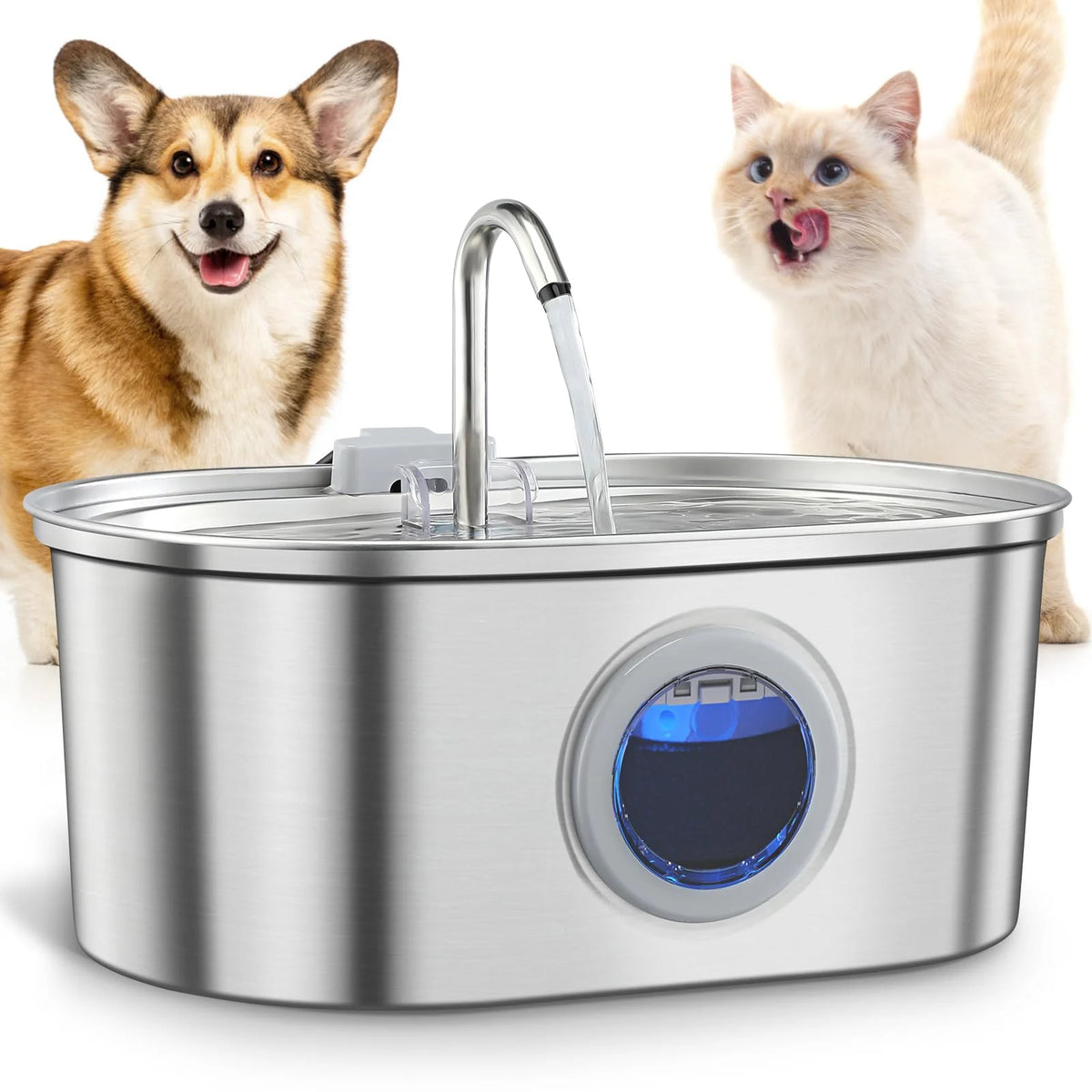
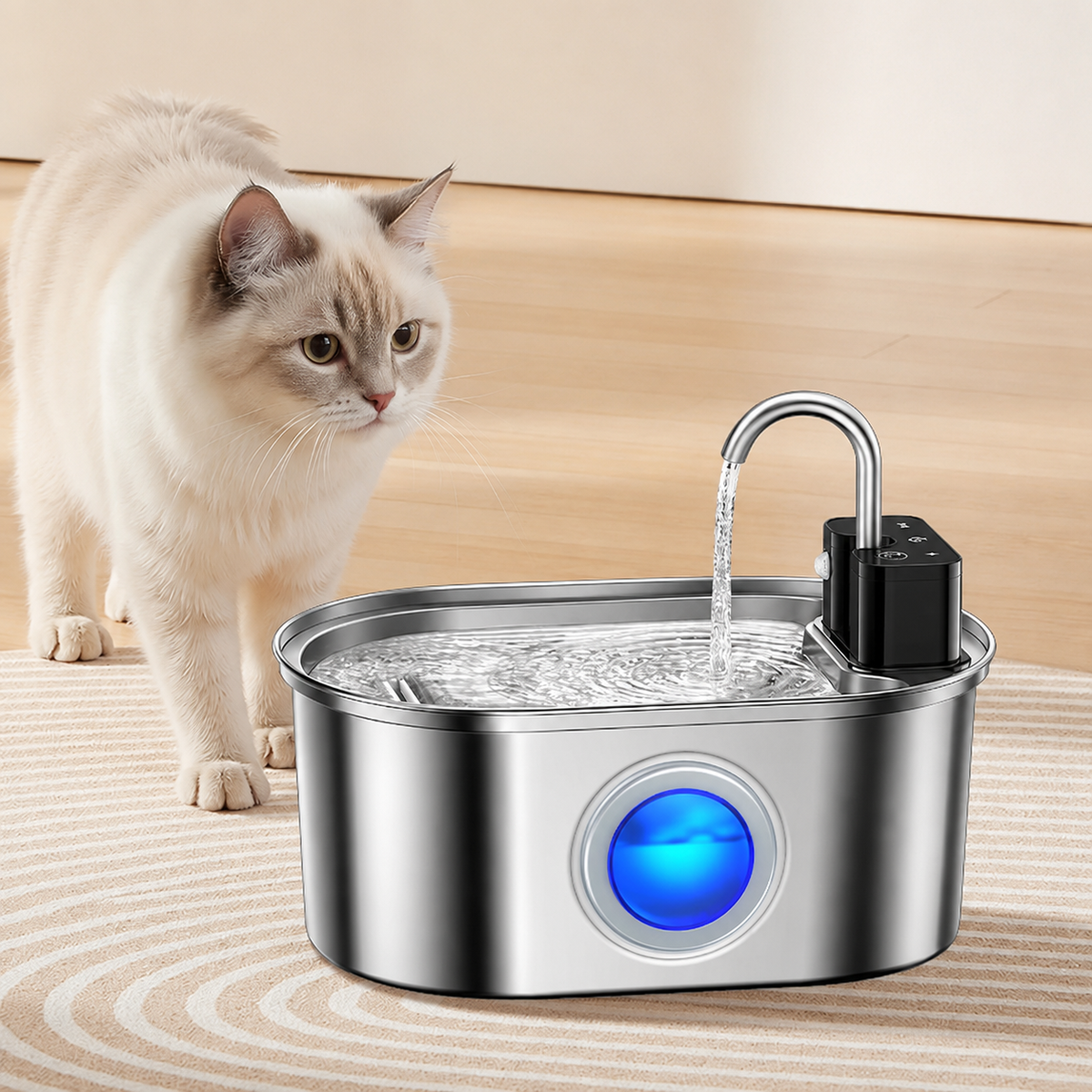
Consider a Pet Water Fountain
Moving water naturally attracts many cats.
Pet fountains continuously circulate and filter water, making it fresher and more appealing.
Many owners notice a significant increase in water consumption after introducing a fountain.
Feed More Wet Food
Moisture-rich food contributes significantly to daily hydration.
Wet cat food contains substantially more water than dry kibble, making it an excellent option for cats that naturally drink less.
Talk with your veterinarian about balancing wet and dry diets based on your cat's age, activity level, and medical history.
Add Extra Moisture to Meals
Some cats benefit from small hydration boosts.
You can safely mix a small amount of warm water into wet food or low-sodium pet-safe broth recommended by your veterinarian.
Avoid using broths containing onions, garlic, or excessive sodium.
Place Water Stations Throughout Your Home
Convenience encourages healthy habits.
Place multiple water bowls in quiet, easily accessible locations away from litter boxes and noisy appliances.
Multi-level homes especially benefit from having water available on every floor.
Seasonal Hydration Tips for the USA and Canada
Weather conditions affect hydration needs throughout the year.
During hot summers in states such as Texas, Arizona, Florida, and parts of California, cats may require additional water because of higher temperatures.
In colder regions across Canada, Minnesota, Michigan, and the northeastern United States, indoor heating can dry the air, increasing water loss through respiration and making fresh drinking water even more important.
Monitor water intake more carefully during seasonal temperature changes.
Schedule Regular Veterinary Wellness Exams
Hydration problems are sometimes symptoms rather than causes.
Kidney disease, diabetes, thyroid disorders, and urinary tract disease can all affect drinking habits.
Pet owners throughout the United States can find qualified veterinarians through the American Veterinary Medical Association (AVMA), while Canadian families can use the Canadian Veterinary Medical Association (CVMA) to locate trusted professionals.
Routine wellness exams help detect these conditions before they become serious.
Encourage Daily Activity
Exercise naturally stimulates thirst.
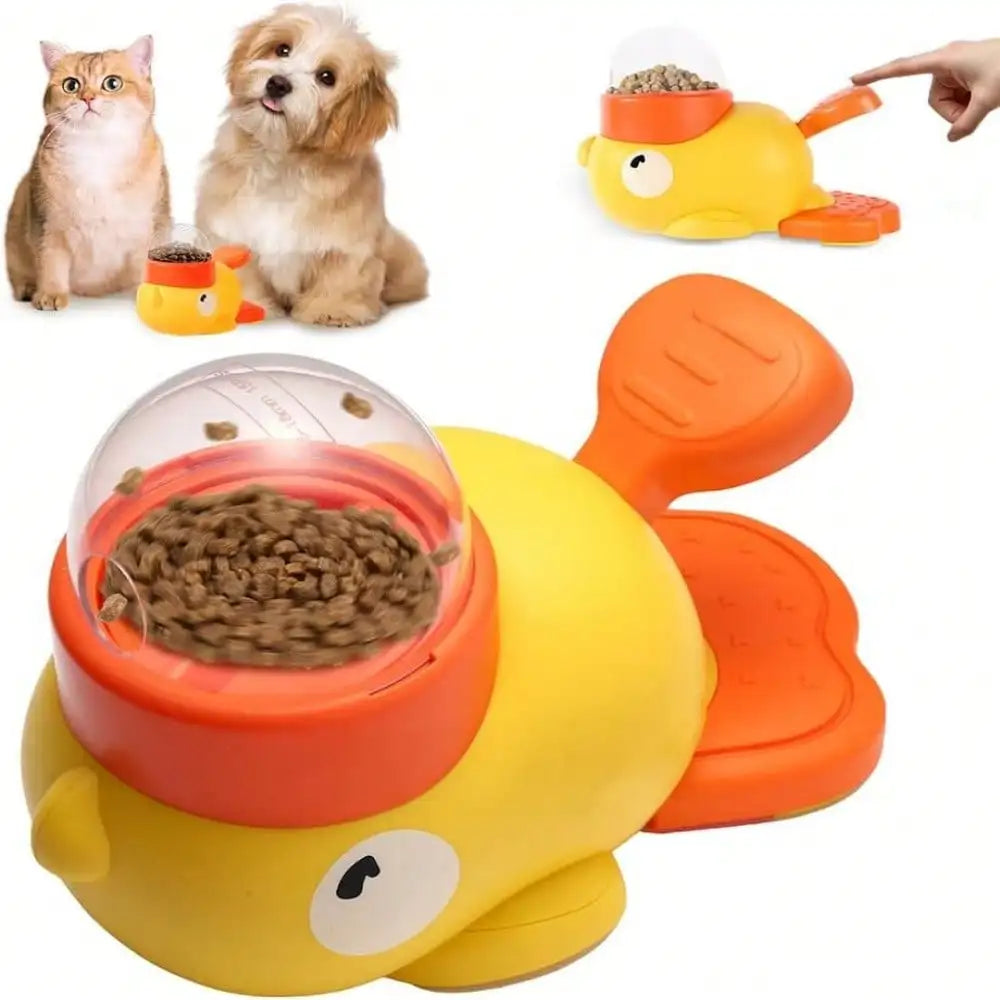
Interactive toys, climbing trees, puzzle feeders, and regular play sessions keep your cat active while promoting healthier drinking habits afterward.
This daily enrichment also supports emotional well-being.
Everyday Habits That Promote Healthy Hydration
Small daily routines produce lasting benefits.
- Replace drinking water every morning.
- Wash bowls regularly.
- Offer multiple water stations.
- Consider a filtered pet fountain.
- Include moisture-rich wet food.
- Monitor daily water intake.
- Watch for changes in urination.
- Keep water away from litter boxes.
- Schedule routine veterinary checkups.
- Increase hydration efforts during extreme weather.
Like Essential Dog Care Tips, these preventive practices help both experienced owners and every New Pet Parent provide outstanding lifelong care alongside responsible chăm sóc chó.
Frequently Asked Questions
How much water should my cat drink?
Water needs vary based on body size, diet, activity level, and environment. Cats eating mostly wet food often drink less because they obtain moisture from their meals.
Why does my cat ignore the water bowl?
Some cats dislike stagnant water, narrow bowls, or bowl placement. Trying a pet fountain or relocating water bowls often improves drinking habits.
Is wet food enough for hydration?
Wet food contributes significantly to hydration, but cats should always have access to clean, fresh drinking water.
When should I call a veterinarian?
Seek veterinary care if your cat refuses water, appears lethargic, vomits repeatedly, urinates much more or less than usual, or shows signs of dehydration.
Final Thoughts
Learning How to Keep Your Cat Hydrated is one of the simplest yet most valuable ways to support long-term feline health. Fresh water, moisture-rich nutrition, proper bowl placement, and routine observation can dramatically reduce the risk of dehydration and urinary health problems.
Whether you're a New Pet Parent in the United States or Canada, healthy hydration habits should become part of your everyday routine. Combined with regular veterinary care, Essential Dog Care Tips, and responsible chăm sóc chó, these preventive steps help every pet live a healthier and happier life.
Have you found a creative way to encourage your cat to drink more water? Share your experience in the comments, pass this guide along to fellow pet owners, and remember to schedule routine wellness visits with your local veterinarian to keep your cat healthy year-round.


